

- HomeProducts
-

Benefits of Online Selective Wave Soldering in High-volume Manufacturing
Views: 0 Author: Site Editor Publish Time: 2026-03-03 Origin: Site


Modern electronics manufacturing faces a critical paradox. Printed Circuit Boards (PCBs) are becoming denser with mixed technologies, combining Surface Mount Technology (SMT) and Through-Hole Technology (THT) on single boards. This complexity makes traditional full-wave soldering risky due to thermal shock and bridging, yet production targets still demand high throughput. Manufacturers often feel stuck between the speed of wave soldering and the precision of manual labor.
This is where the distinction between "offline" and "online" processing becomes vital. Offline or "batch" selective soldering requires manual loading and unloading, which introduces handling risks and slows production. In contrast, an online selective wave soldering machine integrates directly into SMEMA-compliant conveyor systems. These systems are no longer just for low-volume prototypes. They serve as a scalable bridge for high-volume manufacturers aiming to eliminate manual soldering defects and costly fixtures without sacrificing cycle time.
Key Takeaways
Throughput Scalability: How inline automation bridges the speed gap between batch processing and traditional wave soldering.
TCO Realities: Analysis of operational savings (flux/solder reduction) vs. capital investment.
Quality Metrics: The impact on First Pass Yield (FPY) and the elimination of masking/taping labor.
Space Efficiency: The rise of compact footprint solutions (e.g., 1㎡ units) in expensive factory real estate.
Solving the Throughput Bottleneck: Why "Online" Matters
High-volume manufacturing relies on continuous flow. Any process that requires an operator to manually touch a PCB creates a bottleneck. This is the primary flaw of offline selective soldering in a mass-production environment.
The Automation Advantage
In an offline setup, an operator must physically carry a board from a rack, load it into the machine, wait for the cycle, and remove it. This "stop-and-go" motion kills efficiency. Online systems eliminate this entirely.
An online selective wave soldering machine features SMEMA interface integration. This standard allows the machine to communicate directly with upstream pick-and-place machines or reflow ovens. The board enters the soldering module automatically via conveyor. Sensors track its position, the soldering occurs, and the conveyor moves it to the next stage—typically inspection or final assembly. This creates a "hands-off" THT process that matches the seamless flow of SMT lines.
Cycle Time Optimization
Critics often argue that selective soldering is slower than wave soldering. While true for simple boards, modern machines mitigate this through parallel processing. In high-end inline systems, fluxing and soldering often happen simultaneously on different board sections or different modules.
To further match the line beat rate of high-speed SMT lines, manufacturers utilize the "Multi-module" concept. This involves configuring multiple solder pots to work in tandem. For example, if a board requires 60 seconds of soldering time but the line beat rate is 30 seconds, a dual-module machine can solder two boards at once, effectively halving the cycle time per unit.
Reduced Handling Risk
Every time a human touches a PCB, there is a risk. Manual transfer in offline processes introduces two specific dangers:
Electrostatic Discharge (ESD): Even with wrist straps, excessive handling increases the probability of ESD damage to sensitive components.
Physical Trauma: Manual loading can lead to dropped boards, bent pins, or fingerprints on sensitive pads.
Automated conveyors significantly quantify and reduce these risks, ensuring that the physical integrity of the board remains pristine from reflow to final test.
Total Cost of Ownership (TCO) and ROI Drivers
When evaluating capital equipment, the sticker price is deceptive. The true value of selective soldering becomes apparent when analyzing the Total Cost of Ownership (TCO). While wave soldering machines are often cheaper to buy, they are expensive to run.
Consumable Efficiency (The 30-50% Drop)
Selective soldering drastically reduces the consumption of expensive materials. We typically see a 30% to 50% reduction in overall consumable costs compared to wave soldering.
Consumable Traditional Wave Soldering Online Selective Soldering Impact Flux Whole-board spraying (90% waste). Precision jetting (only on joints). Eliminates cleaning; saves material. Solder & Dross Large pot (hundreds of kg) creates massive oxidation (dross). Small nozzles expose minimal surface area to air. Drastic reduction in solder waste and dross disposal costs. Energy Must keep huge thermal mass molten 24/7. Heats small solder volumes; faster startup. Up to 70% energy reduction (industry data). Nitrogen Requires blanketing a large tunnel. Local inerting at the nozzle site only. Significant reduction in gas consumption. The "Hidden Factory" Costs
The most significant savings often come from the elimination of auxiliary processes. In wave soldering, you rarely solder the board "as is." You need protection.
Eliminating Fixtures (Pallets): Wave solder pallets are expensive. They require design time, manufacturing, storage, and regular cleaning. A high-mix factory might spend tens of thousands of dollars annually just on pallets. Online selective soldering often requires zero custom tooling, as the nozzle avoids SMT parts via software control rather than physical shielding.
Eliminating Masking Labor: Without pallets, operators must manually apply Kapton tape to protect sensitive areas. This is labor-intensive and error-prone. Removing the tape after soldering also takes time and can leave residue. Selective soldering eliminates this labor entirely.
Rework Reduction
High-volume manufacturing cannot afford high defect rates. Wave soldering often produces bridges on fine-pitch connectors and skips joints due to shadowing. Industry benchmarks suggest wave soldering processes can have rework rates as high as 12% for complex boards. Selective soldering, with its precise control, frequently drives this down to less than 2%. This massive drop translates directly to labor savings, as you no longer need a dedicated team of rework technicians at the end of the line.
Technical Advantages for Mixed-Technology PCBs
As products shrink, PCB real estate becomes valuable. Engineers are packing SMT components closer to THT parts, creating a nightmare for traditional wave soldering.
Precision in High-Density Designs
Wave soldering lacks finesse. It washes over the entire underside of the board. If a THT pin is located within 3mm of a fine-pitch SMT component, the wave will likely bridge them or wash the SMT part away. Selective soldering utilizes miniature nozzles, some as small as 3mm in diameter. This allows the machine to surgically solder a pin without disturbing a resistor located just millimeters away. This capability is essential for double-sided reflow boards where bottom-side SMT components must remain untouched.
Thermal Management
Thermal control is another area where selective processing excels.
Individual Joint Control: A wave solder machine applies a uniform thermal profile to the whole board. However, a massive ground plane connector requires different heat energy than a small LED. Selective machines allow unique dwell times and pull-off speeds for every single joint.
Reduced Thermal Shock: Immersing a board in a 260°C wave causes significant thermal shock. This can crack ceramic capacitors or damage heat-sensitive components. Selective soldering localizes the heat, protecting the rest of the assembly.
Design Freedom
Adopting an online selective wave soldering machine changes how engineers design products. They are no longer constrained by the "shadow effect" or required pallet clearances of wave soldering. They can place components closer together, reducing the overall PCB size. This reduction in board size cascades into savings on PCB materials, housing enclosures, and shipping logistics.
Evaluating Machine Footprint and Production Floor Efficiency
In many manufacturing regions, factory floor space is at a premium. Adding a long wave soldering tunnel to a production line is a significant real estate commitment.
The Cost of Floor Space
A traditional wave soldering line, including loaders and cool-down zones, can easily span 4 to 6 meters. In high-volume facilities, every square meter carries a cost burden (rent, HVAC, lighting). Large equipment reduces the flexibility of the floor plan and limits the number of lines a factory can support.
Compact High-Output Solutions
We are seeing a strong trend toward compact, high-density machines. Manufacturers are engineering systems that deliver full inline capability without the massive footprint. This allows factories to retrofit selective soldering into existing SMT lines where space is tight.
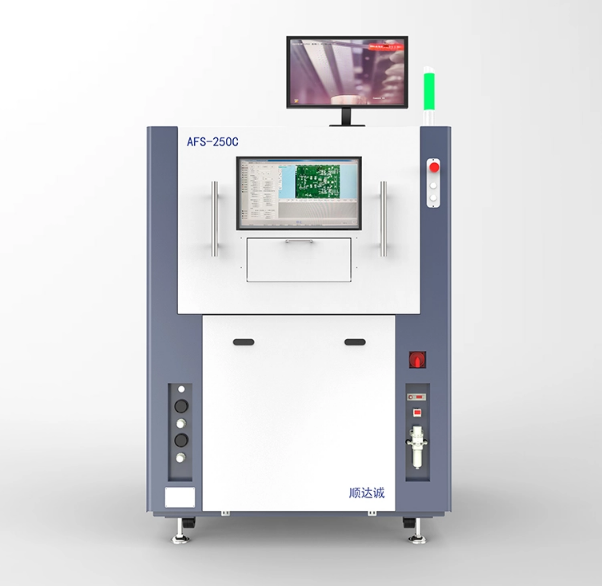
A prime example of this efficiency is the AFS-250C 1㎡ On-line Selective Wave Soldering Machine. This unit demonstrates high capability within a minimal footprint of just one square meter. Despite its small size, it integrates fluxing, preheating, and soldering, making it suitable for tight production lines that cannot accommodate a full-sized tunnel.
Line Balancing
Compact machines facilitate better line balancing strategies. Instead of a centralized wave soldering department, engineers can place these compact units in "cells" or U-shaped lines. This layout maximizes operator utilization, as one operator can manage the reflow oven output, the selective soldering station, and the final assembly, rather than having dedicated staff for a separate wave soldering room.
Selection Criteria: Choosing the Right Manufacturer
Investing in this technology requires due diligence. Not all machines are built effectively for high-volume rigors.
Evaluation Framework for Decision Makers
When comparing options, focus on these three pillars:
Hardware Robustness: Look at the solder pump technology. Electromagnetic pumps are generally superior to mechanical impeller pumps. Electromagnetic systems have no moving parts in the solder, which means less wear and less dross generation. Mechanical impellers require more frequent maintenance.
Software Capabilities: The machine is only as good as its program. Look for easy offline programming that allows engineers to prepare files while the machine is running production. Features like auto-correction (fiducial recognition) and Industry 4.0 traceability (logging temperature and dwell time for every joint) are critical for quality control.
Maintenance Requirements: Ask about the nozzle cleaning frequency. How long does it take to change a solder pot? High-volume lines cannot afford hours of downtime for simple maintenance tasks.
Vendor Support
The machinery is complex. It involves chemistry, thermodynamics, and robotics. Therefore, the importance of choosing a reliable selective soldering machine manufacturer cannot be overstated. You need a partner with local spare parts availability and strong process engineering support. You are not just buying a machine; you are buying a process. If the manufacturer only offers sales support but cannot help you optimize a difficult soldering profile, your ROI will suffer.
Implementation Risks and Mitigation Strategies
Transitioning from wave to selective soldering is not without challenges. Understanding the risks ensures a smoother deployment.
The "Speed" Trap
We must acknowledge a reality: for simple, low-density boards with hundreds of THT pins, traditional wave soldering is still faster. The risk lies in assuming selective soldering is a universal replacement for speed. Mitigation involves accurate cycle time simulation before purchase. If your board has 500 joints, a single-nozzle selective machine will be too slow. You would need a multi-module system or a multi-wave dip plate to compete with wave speeds.
Process Engineering Curve
Wave soldering is often described as "chemistry management"—keeping the pot balanced. Selective soldering is "programming management." The shift requires training engineers to think in terms of robot paths, travel speeds, and nozzle clearance. The first few weeks of implementation often see a learning curve as the team adapts to this new level of precision.
Cleanliness Requirements
Because selective soldering applies flux only where needed, the residues are localized. However, if the flux is not fully activated by heat, it can leave sticky residues. Manufacturers must discuss "no-clean" chemistries tailored for selective processes to avoid "white residue" issues that might look like contamination to a customer. Proper preheating profiles are essential to mitigate this risk.
Conclusion
While traditional wave soldering retains its place in legacy product manufacturing, the future clearly belongs to precision automation. The online selective wave soldering machine is the only viable path for modern high-volume, high-density, mixed-technology electronics. It resolves the conflict between the need for speed and the physical constraints of dense PCB designs.
The transition requires a mindset shift. You must move away from calculating the "cost per solder joint"—where wave soldering often wins on paper—to the "total cost per finished board." When you factor in the elimination of pallets, the reduction in masking labor, energy savings, and the dramatic increase in first-pass yield, selective soldering delivers a superior ROI for today's complex electronics market.
FAQ
Q: Is online selective soldering faster than traditional wave soldering?
A: In terms of raw soldering speed for high-pin-count boards, no. However, when you factor in the total throughput—including the elimination of pallet handling, masking tape application, removal, and post-solder rework—online selective soldering often yields a faster "finished, sellable board" cycle time for mixed-technology assemblies.
Q: What is the typical ROI period for an online selective wave soldering machine?
A: Most manufacturers see a Return on Investment (ROI) within 12 to 18 months. This rapid payback is driven primarily by the elimination of expensive wave solder pallets, significant reductions in nitrogen and electricity consumption, and drastic cuts in rework labor.
Q: Can the AFS-250C handle lead-free soldering processes?
A: Yes. The AFS-250C and similar modern machines are equipped with solder pots and nozzles made from materials like titanium or ceramic that withstand the corrosive nature of high-temperature lead-free alloys (SAC305, SN100C) without degrading.
Q: How much space does an online selective machine require compared to a wave line?
A: Significantly less space. A typical wave soldering line can consume 4 to 6 meters of length. In contrast, compact online selective options like the 1㎡ units fit easily into tight production cells, freeing up valuable factory real estate for other operations.


