

- HomeProducts
-

Selective Wave Soldering for PCB Assembly
Views: 0 Author: Site Editor Publish Time: 2026-03-05 Origin: Site


The conflict between increasing PCB density and the continued need for reliable through-hole (THT) components presents a significant modern assembly challenge. As surface mount technology (SMT) allows for smaller, more powerful devices, engineers still rely on THT parts for power and industrial applications, creating complex mixed-technology boards. While traditional methods served mass production well for decades, they now struggle to accommodate double-sided boards without risking thermal shock or requiring expensive masking.
This shift has driven the industry toward the selective wave soldering machine, a solution designed not just as a replacement, but as a precision alternative for high-reliability applications. Rather than exposing the entire board to heat, this technology targets individual joints with extreme accuracy. This guide assists engineering managers and buyers in evaluating operational trade-offs, Total Cost of Ownership (TCO), and quality implications to make the right production decision.
Key Takeaways
Volume vs. Agility: Wave soldering favors high-volume (>1000/run), low-mix production; Selective favors high-mix, medium-volume (<500/run), and complex geometries.
Cost Structure Shift: Wave relies on expensive physical tooling (pallets) and high energy/solder consumption; Selective relies on programming time and nitrogen costs but eliminates pallets.
Quality Metrics: Selective soldering reduces thermal shock and bridges, achieving defect rates often <1% compared to Wave's 2–5% (which requires manual touch-up).
Design Freedom: Selective soldering allows for tighter component placement (down to 1mm clearance) compared to Wave (requires ~2.5mm+ and theft pads).
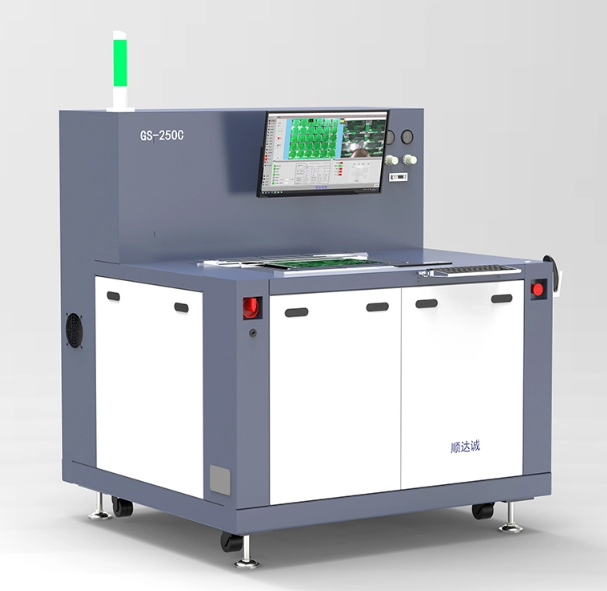
Mechanics of the Selective Wave Soldering Machine Process
Understanding the operational mechanics of selective soldering reveals why it achieves such high precision compared to bulk processes. The machine operates through a coordinated sequence of fluxing, heating, and soldering, all controlled digitally rather than mechanically.
Precision Fluxing (Drop-Jet)
Modern selective machines utilize programmable drop-jet fluxers. Unlike wave fluxers that spray the entire board, drop-jet technology applies flux only to specific joints that require soldering. This targeted approach significantly reduces flux consumption and eliminates the need for aggressive post-wash cleaning. Because flux is not sprayed onto the entire assembly, the risk of ionic contamination on sensitive surface mount components decreases, ensuring higher long-term reliability.
Targeted Pre-heating
Once flux is applied, the board enters the ramp-up phase. The system uses IR or Quartz heaters to raise the board temperature to a specific window, typically between 90°C and 130°C. The goal is to activate the flux solids and drive off solvents without thermally shocking the PCB. Crucially, this pre-heat is controlled to prevent "cooking" adjacent heat-sensitive SMT components, a common risk in traditional wave processes where the entire board is subjected to high thermal mass.
The Mini-Wave Nozzle
The core technology of the system is the mini-wave nozzle. This programmable solder fountain is inerted with nitrogen and moves to the joint, or in some configurations, the board moves over the stationary nozzle. The nozzle creates a stable, small wave of solder.
A critical technical detail is the "peel-off" effect. The nozzle allows for a near 0° soldering angle. As the nozzle moves away from the joint, the solder peels off cleanly. This mechanism, combined with wettable nozzles, virtually eliminates bridging, even on fine-pitch connectors. This capability is what makes a selective wave soldering machine superior for dense layouts.
Process Control
The digital nature of selective soldering allows for unique parameters for every single component. You can set a long dwell time for a massive ground-plane connector to ensure barrel fill, and immediately switch to a short dwell time for a sensitive pin header within the same cycle. This level of granular control is impossible with traditional wave soldering, where the conveyor speed dictates the thermal profile for the entire assembly.
Comparative Analysis: Selective Soldering Services vs. Traditional Wave
When evaluating manufacturing options, direct comparison reveals distinct advantages depending on production goals. The choice between selective and traditional wave impacts throughput, stress, and defect rates.
Throughput & Speed
Traditional wave soldering relies on parallel processing. An entire board passes over the wave in seconds, regardless of how many components are on it. This allows for rates of 200–300 boards per hour. In contrast, selective soldering is a serial process. The nozzle travels point-to-point, meaning cycle time increases with the number of joints. Throughput typically ranges from 20 to 60 boards per hour. While slower, this trade-off is often negated by the elimination of post-process rework.
Thermal Impact & Stress
Wave soldering exposes the assembly to high thermal mass. The entire bottom side of the board contacts molten solder. This creates risks for ceramic capacitors or heat-sensitive ICs located on the secondary side, often leading to hidden micro-cracks. Selective soldering utilizes localized heat input. The thermal shock to the PCB substrate and surrounding components is drastically reduced, preserving the integrity of fragile SMT parts placed near THT leads.
Design for Manufacturing (DFM) Constraints
Engineering teams gain significant layout flexibility with selective processes.
Clearance: Selective soldering allows through-hole (THT) components to be placed within 1mm of SMT parts. Traditional wave processes generally require 2.5mm to 3mm of clearance or the use of protective shadowing pallets, which consume valuable board real estate.
Component Orientation: Wave soldering requires specific component orientation relative to the wave direction to prevent shadowing (where component bodies block solder flow). Selective soldering is orientation-agnostic, offering 360° freedom of movement.
Defect Rates
The most immediate ROI often comes from defect reduction. Wave soldering typically generates a defect rate of 2–5%, manifesting as bridges or icicles that require a manual "touch-up" station. Properly programmed selective soldering machines achieve near-zero defect rates (often <1%). Contract manufacturers offering selective soldering services in PCB assembly can often deliver Class 3 compliance without the variability of hand soldering.
Feature Traditional Wave Soldering Selective Wave Soldering Processing Type Parallel (Whole board at once) Serial (Point-to-point) Clearance Requirement High (~2.5mm+) Low (~1mm) Thermal Shock High (Full board exposure) Low (Localized heating) Typical Defect Rate 2–5% (Requires rework) <1% (Zero-defect target) TCO and ROI: Analyzing Cost Drivers Beyond the Equipment
The sticker price of the machine is only one component of the total cost of ownership (TCO). Operational expenses often shift dramatically between the two technologies.
NRE (Non-Recurring Engineering) Costs
Wave soldering carries high physical NRE costs. For every board revision or new product, custom apertures and pallets must be machined. These physical tools require storage, maintenance, and replacement. Selective soldering shifts cost to the digital realm. Programming a new board takes engineering time—typically 1 to 2 hours—but requires zero physical tooling. This makes selective technology ideal for New Product Introduction (NPI) and environments with frequent design changes.
Consumables & Waste
Traditional wave machines generate significant dross (oxidized solder waste) due to the large surface area of the solder pot exposed to air. They also consume large volumes of flux. A large wave solder pot requires a massive initial investment in solder, often hundreds of kilograms.
Selective systems operate in a nitrogen environment, resulting in minimal dross generation. Flux is applied drop-by-drop only where needed. While the machines consume less energy by heating smaller pots, the ongoing cost of liquid nitrogen is an added operational expense (OpEx) that must be factored into the ROI calculation.
Labor Reduction
Labor savings frequently justify the investment in selective technology. Wave soldering mixed-technology boards often requires operators to manually apply Kapton tape or temporary solder masks to protect SMT parts. After soldering, the tape must be removed, and bridges must be touched up by hand. Selective soldering eliminates both the pre-process masking and the post-process rework, streamlining the line and reducing labor dependencies.
Strategic Decision Framework: When to Use Which Method
Choosing the correct soldering method depends on balancing volume, complexity, and reliability requirements. Use the following scenarios to guide your strategy.
Scenario A: The "Wave" Candidate
Traditional wave soldering remains the champion for specific profiles. If your project involves simple, single-sided THT designs with massive production runs—such as consumer electronics or white goods—wave is the answer. It thrives in non-dense layouts where component spacing is generous, and the sheer speed of processing thousands of boards outweighs the cost of pallets and dross.
Scenario B: The "Selective" Candidate
Selective soldering services in PCB assembly are the standard for high-reliability sectors like Aerospace, Automotive, and Medical. This method is the clear choice for double-sided reflow boards that contain a few heavy connectors or THT capacitors. It is also essential for boards with thick copper layers or ground planes. These heavy thermal mass boards require extended dwell times that manual soldering cannot heat consistently. Additionally, for prototypes and short-runs (<500 units), the cost of fabricating wave pallets makes the selective process far more economical.
Scenario C: The Hybrid Approach
Many advanced manufacturers employ a hybrid approach. They may use a bulk wave process for the majority of standard components and then utilize a selective module for difficult-to-reach or thermally sensitive components. Alternatively, selective modules can replace manual hand-soldering lines to improve repeatability and ensure IPC Class 3 compliance on critical joints.
Conclusion
The choice between these technologies is not about which is "better" in a vacuum, but which fits the specific volume-complexity curve of your project. While traditional wave soldering wins on raw speed for simple, high-volume boards, the selective wave soldering machine wins on the total cost of quality for modern, mixed-technology PCBA.
For engineering managers, the ability to eliminate pallets, reduce thermal shock, and achieve zero-defect soldering justifies the slower cycle time in high-mix environments. When sourcing manufacturing partners, advise buyers to look for CMs (Contract Manufacturers) that offer both capabilities. This ensures your product is not forced into a suboptimal process due to equipment limitations, safeguarding both your budget and your board's reliability.
FAQ
Q: Is selective soldering slower than wave soldering?
A: Yes, significantly. Wave handles boards in parallel (seconds), while selective treats each joint or segment serially (minutes). However, it eliminates post-process manual rework, often equalizing total cycle time for complex boards.
Q: Does selective soldering require special PCB design changes?
A: Generally, no. It is more forgiving than wave soldering. However, ensuring a 1mm–1.5mm clearance around through-hole pads allows the nozzle to seal effectively without hitting adjacent SMT parts.
Q: Can selective soldering handle lead-free alloys?
A: Yes. Selective machines often use nitrogen inerting and specific pot materials (titanium/cast iron) to handle higher-temperature lead-free alloys (SAC305, etc.) without rapid oxidation or pot erosion.
Q: Why is nitrogen used in selective soldering?
A: Nitrogen displaces oxygen at the nozzle site. This prevents solder oxidation (dross), ensures better wetting (spread) of the solder, and reduces the frequency of nozzle cleaning maintenance.


