

- HomeProducts
-

What Is Nitrogen Selective Soldering, and When Is It Necessary?
Views: 0 Author: Site Editor Publish Time: 2026-10-26 Origin: Site


Modern printed circuit board assembly leaves virtually no margin for error. Mixed-technology boards featuring high-density interconnects place strict thermal limits on surrounding surface-mount components. Traditional wave soldering often exposes these sensitive components to excessive heat, making localized soldering techniques mandatory. Manufacturing engineers face a compounding operational drain from through-hole soldering defects. Bridging, icicling, solder beads, and poor hole fill destroy production yields. Compounding this challenge is the rapid accumulation of solder dross, especially when processing easily oxidized lead-free alloys. Facility managers watch expensive solder turn into unusable waste daily. Rather than treating inert atmospheres as a universal requirement, nitrogen selective soldering serves as a precise metallurgical intervention. It alters surface tension, prevents oxidation at the nozzle, and stabilizes defect per million (DPPM) rates for high-reliability manufacturing.
Oxidation Prevention: Nitrogen environments displace oxygen at the solder wave, drastically reducing dross formation and protecting the integrity of the solder alloy.
Defect Reduction: Lowering the surface tension of molten solder alters "snap-off" dynamics, directly reducing the incidence of bridging, webbing, solder flags, and solder beading.
Lead-Free Necessity: The higher melting points and aggressive oxidation rates of SAC (tin-silver-copper) alloys make nitrogen virtually mandatory for reliable lead-free selective soldering.
Enhanced Joint Strength: By eliminating oxygen inclusions during the wetting phase, nitrogen ensures stronger, more reliable mechanical bonds at the component terminations.
ROI Calculation: The ongoing operational expense of nitrogen gas is typically offset by the reduction in manual rework, lower dross reclamation costs, and decreased solder consumption.
The Mechanics of Nitrogen Selective Soldering
How Inert Gas Alters the Soldering Environment
Oxygen reacts aggressively with molten solder to form tin oxides. This byproduct is commonly known as dross. Nitrogen acts as an inert blanket, displacing ambient oxygen to maintain the solder in a pure metallic state. Implementing nitrogen nozzle protection selective soldering envelopes the localized mini-wave in a continuous, heated shroud of N2 gas. The gas flows concentrically around the liquid metal, creating an invisible barrier against the factory atmosphere.
Pre-heated nitrogen maintains the thermal mass of the solder wave. Cold gas would strip heat from the nozzle, causing temperature drops right when thermal energy is needed most. Pre-heating prevents premature cooling as the molten metal contacts the PCB. This thermal stability mitigates the risk of cold solder joints and ensures consistent heat transfer up through the plated barrel. Operators on the floor immediately notice the difference in wave stability. Without the interference of an oxide skin, the solder flows with a mirror-like finish. This pristine surface allows the solder to wet the component lead instantly upon contact. The fluid dynamics change entirely. Instead of fighting a sluggish, skin-covered wave, the machine delivers a highly active, fluid solder column directly to the target joint.
The Role of a Nitrogen Protected Solder Pot
A nitrogen protected solder pot seals the bulk solder supply from ambient air. Heavy steel covers and continuous gas purging maintain an inert atmosphere over the main reservoir. This architecture prevents dross formation before the solder even reaches the pump mechanism.
Preventing oxide buildup in the main pot extends the lifespan of impellers and reduces the frequency of aggressive maintenance cycles. Operators spend less time scraping hardened oxides from the pump shaft. Clean pumps ensure consistent wave height and smoother fluid dynamics. When the pump operates without fighting abrasive oxide chunks, the mini-wave remains perfectly stable, allowing for microscopic precision during component soldering.
Consider the mechanical wear on an unprotected system. Tin oxides are incredibly abrasive. As they get sucked into the impeller housing, they grind against the moving parts. Over months of continuous operation, this wear alters the pump's efficiency. The wave height begins to fluctuate. A fluctuating wave leads to skipped joints or excessive solder deposition. By sealing the pot with nitrogen, you eliminate this abrasive wear at the source. The pump maintains its factory calibration much longer, ensuring repeatable performance across thousands of production hours.
Process Metric
Standard Air Atmosphere
Nitrogen Atmosphere
Dross Formation
High (Requires daily skimming)
Minimal (Reduced by up to 90%)
Surface Tension
High (Prone to bridging and icicling)
Low (Clean snap-off dynamics)
Wetting Capability
Poor to Moderate (Oxide interference)
Excellent (Optimal capillary action)
Maintenance Frequency
High (Pump and nozzle clogging)
Low (Extended equipment lifespan)
Core Metallurgical and Process Benefits
Solder Dross Reduction with Nitrogen
Dross can consume up to 50% of the solder volume in an unprotected open-pot system. This represents a massive financial leak for any assembly floor. Achieving effective solder dross reduction with nitrogen relies on a direct correlation between oxygen parts-per-million (PPM) levels and the rate of oxide skin formation. Lowering oxygen concentration starves the oxidation reaction entirely.
Less dross means lower material waste and reduced hazardous waste disposal fees. Production halts for pot skimming drop dramatically. Instead of stopping the line twice a shift to scrape the pot, operators might perform this task once a week. This keeps the machine running and producing acceptable boards, directly improving overall equipment effectiveness.
The labor savings alone justify the gas consumption. Skimming a hot solder pot is a hazardous, time-consuming task. It requires the operator to halt production, don protective gear, open the machine, and manually remove the dross. Every minute spent skimming is a minute the machine is not generating revenue. By suppressing dross formation, nitrogen keeps the machine in a productive state.
Surface Tension and "Snap-Off" Dynamics
"Snap-off" refers to the exact moment the PCB separates from the solder wave at the component terminations. Oxygen creates a rigid oxide skin on the molten solder. This skin acts like a microscopic bag, increasing surface tension. It causes the solder to drag, forming bridges or icicles between adjacent pins.
A nitrogen blanket lowers this surface tension immediately. The molten metal behaves more fluidly, allowing the solder to snap back cleanly into the metal nozzle. This mechanism ensures precise, repeatable joints even on fine-pitch components where clearance is minimal. Clean snap-off eliminates the need for operators to manually wick away excess solder with a soldering iron.
When dealing with connectors that have a 1.27mm pitch or smaller, snap-off dynamics dictate your yield. High surface tension will bridge those pins every single time. The solder simply cannot separate fast enough as the board moves away from the nozzle. Nitrogen changes the physical properties of the liquid metal at that boundary layer. The solder retracts instantly, leaving perfectly formed fillets without any webbing.
Improved Wetting, Capillary Action, and Void Reduction
An oxide-free solder surface drastically improves wetting angles on component leads and barrel plating. This eliminates non-wetting defects where solder fails to adhere properly to the pad. Enhanced capillary action leads to superior through-hole fill. The fluid solder climbs the plated through-hole effortlessly, meeting IPC Class 3 requirements without requiring excessive contact time or dangerously high solder temperatures.
Nitrogen displacement also prevents the entrapment of atmospheric gases. When solder rolls over a pad in an oxygen-rich environment, it can trap air pockets. Nitrogen purging significantly lowers the occurrence of solder voids and rogue solder beads. Clean, void-free joints provide superior electrical conductivity and mechanical stability.
Achieving 100% barrel fill on thick boards is notoriously difficult. The capillary action must overcome the thermal mass of the board pulling heat away from the joint. If the solder is sluggish due to oxidation, it will freeze before reaching the top of the barrel. Nitrogen keeps the solder highly active. It wicks up the barrel rapidly, forming a visible top-side fillet before the thermal energy dissipates.
Mechanical Strength and Long-Term Joint Reliability
Microscopic oxide inclusions weaken the intermetallic bond. They create stress risers within the joint, acting as starting points for micro-fractures. Soldering in a nitrogen-rich environment produces a denser, more homogenous solder joint.
These pristine connections withstand higher mechanical shock, vibration, and thermal cycling stresses in the field. When a PCB is deployed in harsh environments, joint integrity determines the lifespan of the entire product. Removing oxygen from the equation guarantees the metallurgical bond forms perfectly between the component lead, the copper pad, and the solder alloy.
Consider a control board mounted near an industrial motor. It experiences constant vibration and wide temperature swings. A solder joint with oxide inclusions will eventually crack under these conditions. The crack propagates through the joint, leading to intermittent electrical failures that are incredibly difficult to diagnose. Nitrogen ensures the joint structure is solid metal, free from the microscopic defects that cause premature field failures.
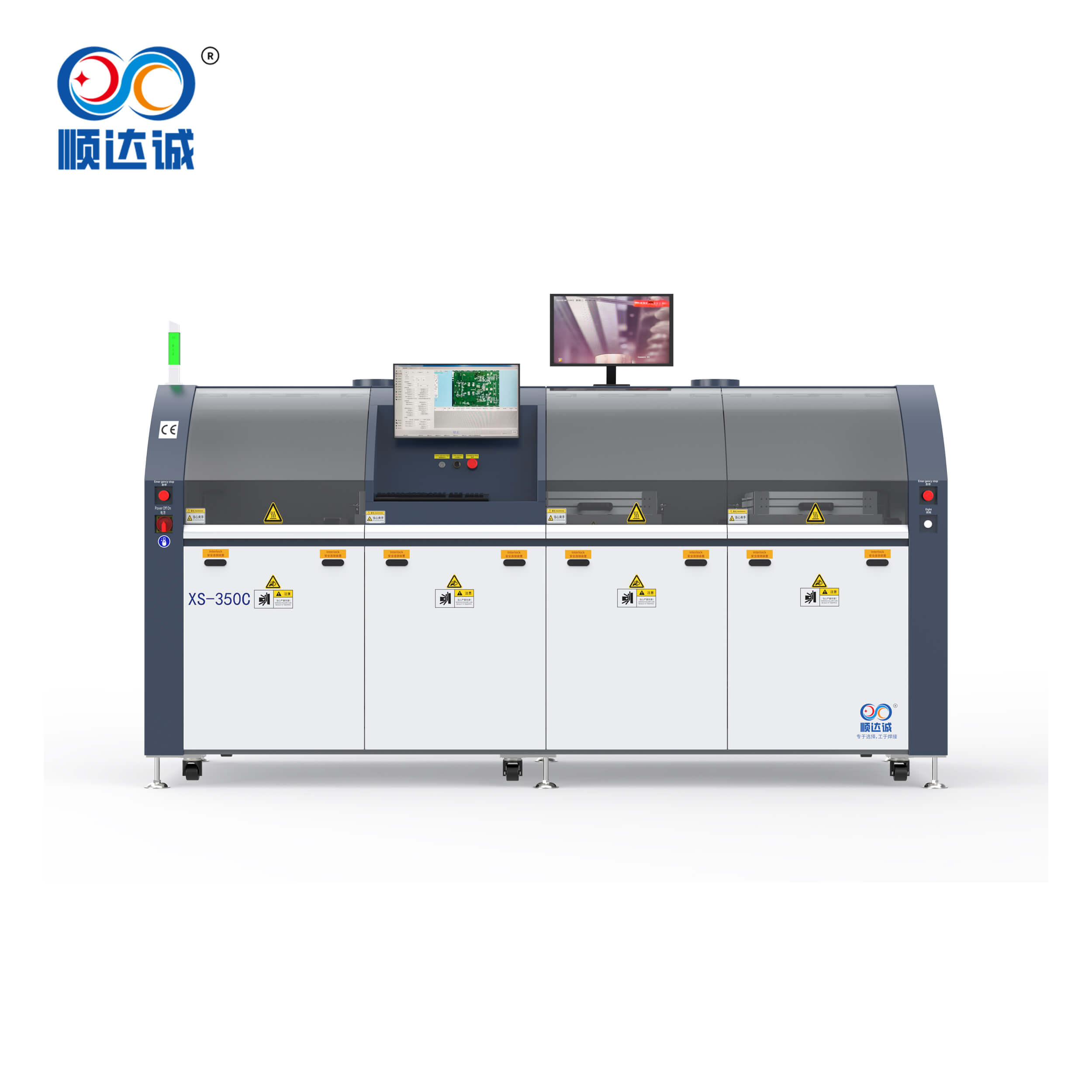
When is Nitrogen an Absolute Requirement? (Decision Framework)
Lead-Free Soldering Operations
Lead-free alloys, such as SAC305 and SAC0307, present distinct processing challenges. They feature higher melting temperatures, sluggish flow characteristics, and rapid oxidation rates compared to traditional tin-lead alloys. The high tin content reacts violently with oxygen at elevated temperatures.
Investing in lead free selective soldering equipment without integrated nitrogen capabilities is a false economy. Defect rates will inevitably bottleneck production. The resulting manual rework negates any initial equipment savings. Operators will struggle with bridging and poor hole fill constantly. Nitrogen transforms sluggish lead-free alloys into highly workable, fluid materials.
Attempting to run SAC305 in an open-air selective soldering machine is an exercise in frustration. The nozzle will clog with dross within hours. The wave will become erratic, and the defect rate will skyrocket. Nitrogen is not an optional accessory for lead-free processing; it is a fundamental requirement for process stability.
High-Reliability and Mission-Critical Sectors
Aerospace, defense, automotive, and medical device manufacturing treat nitrogen as non-negotiable. These sectors demand strict compliance with IPC Class 3 and J-STD-001 standards. Voiding, poor hole fill, and rework-induced thermal stress are completely unacceptable in mission-critical hardware.
A failed solder joint in an automotive braking system or a medical ventilator carries catastrophic consequences. Nitrogen guarantees the repeatable precision necessary to pass stringent X-ray and automated optical inspections. It provides the process control required for rigorous traceability and quality assurance mandates.
In these industries, the cost of a field failure far exceeds the cost of nitrogen gas. Manufacturers must prove their processes are stable and repeatable. Nitrogen provides that stability. It removes the variable of atmospheric oxidation from the soldering equation, allowing engineers to lock in their thermal profiles and machine parameters with confidence.
High-Mix, High-Density PCB Configurations
Thick, high-layer-count boards with heavy copper planes act as massive heat sinks. They draw thermal energy away from the through-hole barrel rapidly. Achieving 100% barrel fill on a board with 2oz or 3oz internal copper layers requires immense thermal transfer.
Nitrogen aids in this thermal transfer, ensuring adequate heat reaches the top side of the barrel before the flux is exhausted. This thermal assist is mandatory for complex, densely populated assemblies. Without nitrogen, the solder freezes halfway up the barrel, resulting in a rejected board and complex rework procedures.
Reworking a thick, heavy-copper board is risky. Applying enough heat with a manual soldering iron to reflow the joint often damages the barrel plating or delaminates the PCB substrate. Getting the joint right the first time on the selective soldering machine is paramount. Nitrogen provides the fluid dynamics and thermal stability needed to achieve first-pass success on these challenging assemblies.
Evaluating Nitrogen Supply and Integration Options
Localized Shrouds vs. Full Tunnel Systems
Manufacturers must choose between localized nitrogen shrouds applied only at the mini-wave nozzle and full-machine nitrogen tunnels. Localized systems consume significantly less gas and offer easier access for maintenance. They target the inert gas exactly where the metallurgical bonding occurs.
Full tunnels provide comprehensive pre-heat protection, keeping the entire board in an oxygen-free environment. However, they require higher capital expenditure and massive gas volume to maintain positive pressure. For most selective soldering applications, localized heated shrouds provide the best balance of gas conservation and defect reduction.
A localized shroud acts like a miniature atmosphere control chamber. It surrounds the nozzle with a curtain of hot nitrogen. As the board moves over the nozzle, the shroud ensures the immediate soldering area remains oxygen-free. This approach is highly efficient. It delivers the metallurgical benefits of nitrogen without the massive gas consumption associated with flooding an entire machine tunnel.
Nitrogen Purity Requirements (O2 PPM Thresholds)
Optimal soldering typically requires residual oxygen levels between 10 PPM and 50 PPM at the nozzle. Pushing purity below 10 PPM yields diminishing returns. Achieving ultra-high purity exponentially increases gas generation or procurement costs without delivering a measurable improvement in joint quality.
Facilities must rely on accurate zirconia or electrochemical oxygen sensors to monitor these levels continuously. Closed-loop systems automatically adjust gas flow to maintain the target PPM. This prevents gas waste during idle periods while ensuring absolute protection during the soldering cycle.
Operating at 50 PPM provides excellent results for most lead-free alloys. At this level, the oxide skin cannot form fast enough to interfere with the soldering process. The wave remains bright and fluid. Investing in equipment that can monitor and control this PPM level automatically takes the guesswork out of the process. The machine adjusts the gas flow dynamically based on real-time sensor feedback.
Flux Chemistry Compatibility and No-Clean Processes
Because the environment is oxygen-free, the flux does not have to work as hard to reduce surface oxides. This allows manufacturers to transition to milder, low-solids, no-clean fluxes. Eliminating aggressive water-soluble fluxes removes secondary washing steps.
Dropping the wash cycle reduces chemical costs, lowers water consumption, and streamlines the production floor. Milder fluxes also leave less residue on the board, improving the cosmetic appearance of the final assembly and preventing long-term dendritic growth issues.
Applying flux with a high-precision drop-jet dispenser in a nitrogen environment is highly efficient. You only need a microscopic amount of flux to prepare the pad and lead. The nitrogen handles the rest of the oxidation prevention. This minimal flux application leaves the board looking clean and professional straight out of the machine, ready for conformal coating or final assembly.
Scaling to an Industrial Inline Selective Soldering System
High-volume manufacturing environments transitioning from batch to continuous flow require robust atmospheric management. An industrial inline selective soldering system integrates nitrogen control across multiple pre-heat zones and dual-nozzle configurations.
This architecture maximizes throughput while maintaining strict atmospheric control. Dual nozzles can process multiple boards simultaneously or handle different nozzle sizes for varying component pitches. Inline systems ensure every board receives identical processing conditions, eliminating the variability inherent in manual or batch loading.
When scaling up, consistency is everything. An inline system with integrated nitrogen management guarantees that board number one thousand receives the exact same thermal profile and inert atmosphere as board number one. The automated conveyors move the product seamlessly through the fluxing, pre-heating, and soldering zones, all while maintaining the precise nitrogen blanket required for defect-free production.
Cost-to-Value Analysis and ROI Factors
CapEx vs. OpEx: Equipment and Operational Costs
Evaluating the initial capital expenditure of nitrogen-equipped machinery requires balancing it against the ongoing operational expenditure of gas consumption. Facilities must compare nitrogen supply methods carefully to ensure long-term profitability.
Installing an on-site nitrogen generator often provides better long-term ROI for high-volume operations. It fixes the cost of gas production and eliminates delivery logistics. Conversely, bulk liquid nitrogen cylinders or dewars may suit lower-volume facilities. While cylinders have lower upfront costs, the recurring delivery fees and rental charges accumulate rapidly over years of continuous production.
A nitrogen generator pulls ambient air, compresses it, and separates the nitrogen from the oxygen using a carbon molecular sieve. Once installed, the cost of nitrogen drops to the cost of the electricity required to run the air compressor. For a facility running multiple shifts, the payback period on a generator can be less than eighteen months.
Rework Reduction and DPPM Improvements
Calculating ROI based on defect reduction reveals the true value of inert soldering. Hidden costs of rework include operator time, thermal stress on adjacent SMD components, scrapped boards, and potential field failures.
Slashing DPPM rates directly improves yield. Pushing more acceptable product out the door without secondary touch-ups increases factory capacity. When operators stop fixing bridges and start inspecting perfect joints, the entire assembly line moves faster. The reduction in solder bar purchases due to lower dross formation further accelerates the payback period.
Consider the hourly rate of a skilled rework technician. Add the cost of the replacement components, the solder wick, the liquid flux, and the overhead of the rework station. Now multiply that by the hundreds of defects generated daily by an unstable open-air process. The financial drain is staggering. Nitrogen eliminates this drain at the source, turning rework technicians into final inspectors.
Implementation Risks and Mitigation Strategies
Managing Nitrogen Flow Rates and Turbulence
Excessive nitrogen flow causes turbulence at the nozzle. This disrupts the stability of the mini-wave, leading to skipped joints, uneven wetting, or solder splashing across the PCB. High-pressure gas can literally blow the molten solder away from the component lead.
Mitigation requires programmable, closed-loop mass flow controllers. These devices dial in the exact gas pressure required for different nozzle sizes. A 3mm nozzle requires vastly different gas dynamics than a 12mm nozzle. Precision control ensures a laminar flow that protects the wave without physically disturbing the liquid metal.
Operators must understand that more nitrogen is not always better. Blasting the nozzle with high-pressure gas creates a venturi effect, pulling ambient oxygen into the soldering zone. The goal is a gentle, laminar curtain of gas that displaces the oxygen without creating turbulence. Mass flow controllers allow engineers to program the exact flow rate into the soldering recipe for each specific board.
Equipment Maintenance and Metal Nozzle Degradation
While nitrogen reduces dross, it does not eliminate the need for metal nozzle maintenance. An N2 selective wave soldering machine still experiences nozzle wear and de-wetting over time. Liquid solder is highly corrosive to certain metals.
Mitigation involves a realistic preventative maintenance schedule. Operators must regularly clean and re-tin nozzles to prevent erratic wave dynamics. Using specialized nozzle conditioning tools ensures the solder flows evenly over the lip of the nozzle. Consistent maintenance guarantees the nitrogen shroud functions correctly and the solder application remains perfectly uniform.
Inspect the nozzle visually at the start of every production shift for signs of de-wetting.
Apply a specialized re-tinning compound to the nozzle lip while at operating temperature.
Brush the nozzle gently with a brass wire brush to remove stubborn oxide deposits.
Purge the nitrogen lines weekly to ensure no flux vapor has condensed inside the shroud.
Conclusion
Nitrogen selective soldering is not a luxury feature, but a baseline requirement for modern, lead-free, high-reliability PCB assembly. Attempting to process complex, high-density boards in an open-air environment guarantees high defect rates and unacceptable rework costs. Engineering teams should prioritize equipment that offers closed-loop nitrogen control, localized heated shrouds, and verifiable O2 PPM monitoring.
Conduct a thorough audit of current wave soldering defect rates to identify primary failure modes and bridging locations.
Calculate the annual operational cost of dross reclamation, material waste, and manual rework labor.
Request empirical trial runs with prospective equipment vendors using your most challenging, heavy-copper PCB assemblies.
Evaluate facility infrastructure to determine the feasibility of an on-site nitrogen generator versus bulk liquid supply.
Implement strict preventative maintenance schedules for nozzle cleaning and pump inspection to maximize equipment uptime.
FAQ
Q: Does an N2 selective wave soldering machine completely eliminate solder dross?
A: No, but it reduces it by up to 80-90% compared to open-air systems. This massive reduction significantly lowers maintenance downtime and material costs associated with skimming and replacing oxidized solder.
Q: What is the ideal nitrogen purity level for selective soldering?
A: The target is typically between 10 and 50 PPM of residual oxygen. The exact requirement depends on the specific solder alloy and flux chemistry being used on the production line.
Q: Can I use a nitrogen generator, or do I need bulk liquid nitrogen?
A: Both work effectively. Generators offer better long-term ROI for high-volume facilities by fixing gas costs, while bulk cylinders may suit lower-volume or prototype operations with limited capital budgets.
Q: How does nitrogen affect the choice of flux in selective soldering?
A: Nitrogen widens the process window, allowing for the use of milder, low-solids no-clean fluxes. The flux does not have to work as hard to fight oxidation, reducing chemical residue on the board.
Q: Is nitrogen necessary for tin-lead (SnPb) selective soldering?
A: While less critical than with lead-free alloys, nitrogen still provides measurable benefits in dross reduction, void elimination, and defect mitigation for traditional SnPb processes.
Q: How does nitrogen pre-heating improve the soldering process?
A: Pre-heating the inert gas prevents it from cooling the localized solder wave. This maintains a stable thermal profile, ensuring proper barrel fill and preventing cold solder joints.


