

- HomeProducts
-

Reducing Labor Costs with On-line Selective Wave Soldering Machines for Multivariety Production
Views: 0 Author: Site Editor Publish Time: 2025-09-11 Origin: Site


Electronics manufacturing has entered an era where efficiency, precision, and cost control define competitiveness. Companies not only face the pressure to produce high-quality printed circuit boards (PCBs) but must also manage diverse product demands with minimal errors and reduced costs. Among these challenges, labor costs stand out as one of the most significant expenses in production. With the rising complexity of electronic designs and the increasing mix of components, manufacturers require reliable solutions to maintain profitability while delivering consistent quality.
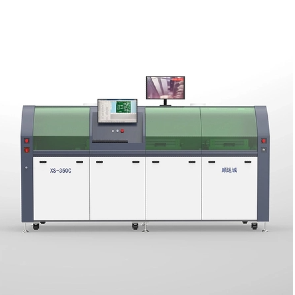
One solution that has gained widespread acceptance is the use of on-line selective wave soldering machines, particularly in multivariety production environments. These machines are designed to automate the soldering of through-hole components, handle mixed technology boards, and adapt to different product types without the heavy reliance on manual labor. By doing so, they help manufacturers significantly reduce labor costs while maintaining flexibility and ensuring high product reliability.
The Rising Costs of Manual Labor in Electronics Assembly
Electronics production has traditionally relied on human labor for soldering, especially when it comes to through-hole components. Skilled operators manually apply soldering irons to joints, or entire boards are sent through wave soldering machines that require significant setup and supervision.
However, several issues make this approach increasingly unsustainable:
High wages and benefits – As wages increase globally, depending on manual labor alone drives up production costs.
Training and skill variation – Soldering requires precision, and not all workers achieve the same level of consistency, leading to defects or rework.
Repetitive strain and fatigue – Human operators are prone to errors when working long hours, resulting in decreased quality over time.
Limited scalability – Expanding production requires hiring and training more workers, which slows growth and increases expenses.
For companies managing multivariety production—where different PCB designs and product types run on the same line—these challenges multiply. Each design change requires new training, different soldering strategies, and constant adjustments, all of which add to labor costs.
What is On-line Selective Wave Soldering?
On-line selective wave soldering is a specialized soldering process designed to handle through-hole components with precision and automation. Unlike traditional wave soldering, which immerses the entire underside of the PCB in molten solder, selective wave soldering targets only specific pads and component leads.
An on-line system means the soldering machine is integrated into an automated production line. Boards are transported on conveyors directly into the soldering station, where fluxing, preheating, and selective soldering take place without human handling. The process is programmable, meaning that once the parameters are set for a particular PCB design, the machine can repeat the operation consistently without additional labor input.
This capability makes on-line selective wave soldering particularly suitable for multivariety production, where product designs frequently change, and flexibility is essential.
How Selective Wave Soldering Reduces Labor Costs
Automation of Repetitive Tasks
Manual soldering requires operators to perform repetitive movements, which is both time-consuming and labor-intensive. Selective wave soldering machines automate these tasks, eliminating the need for large teams of skilled workers. Once programmed, the machine can run continuously, freeing human resources for more value-added activities.
Consistency Without Skilled Labor Dependence
Skilled soldering technicians are costly to hire and train. Even then, human operators often produce inconsistent results. Selective soldering machines deliver repeatable and reliable joints without the need for highly skilled operators at every stage. This reduces the reliance on expensive technical labor, lowering overall payroll costs.
Faster Changeovers for Multivariety Production
In environments where multiple PCB designs are produced, manual soldering requires new instructions and re-training for each design change. Selective wave soldering machines, however, allow manufacturers to switch between designs quickly by loading pre-programmed profiles. This reduces downtime and eliminates the labor costs associated with frequent retraining.
Minimization of Rework and Scrap
Defective solder joints not only waste materials but also require additional labor for rework. By delivering high-quality joints with fewer defects, selective soldering machines reduce the time and cost spent on rework. Over time, this leads to significant labor savings.
Integration with Inline Production
Because on-line selective soldering machines are designed to be part of a continuous production line, boards move seamlessly from placement to soldering without manual handling. This reduces the need for workers to move boards, monitor processes, or manually inspect every step, further reducing labor costs.
Advantages in Multivariety Production
Flexibility in Handling Different Products
One of the greatest challenges in modern electronics manufacturing is the need to produce a wide variety of products on the same line. From small-batch custom PCBs to high-volume runs, selective wave soldering machines can adapt to different board layouts and component types simply by adjusting software settings. This flexibility allows manufacturers to meet diverse customer demands without increasing headcount.
Quick Setup for New Designs
In multivariety production, new designs frequently enter the line. Manual processes require retraining workers and adjusting equipment, leading to downtime and higher labor costs. With selective soldering machines, however, setups are stored digitally. Operators can switch to a new design profile in minutes, significantly reducing the labor required for preparation.
Improved Quality Across Different Boards
Consistency is critical when manufacturing different PCB designs. Machines do not suffer from fatigue or inconsistency, so every joint—whether for a high-power connector or a delicate component—is soldered with the same precision. This not only enhances reliability but also reduces quality-control labor.
Long-Term Cost Benefits
While the initial investment in selective wave soldering machines can be substantial, the return on investment (ROI) comes from reduced labor costs over time. Factors contributing to long-term savings include:
Lower workforce requirements – Fewer operators are needed to handle soldering processes.
Reduced overtime – Machines can run longer hours without incurring additional wages.
Higher throughput – Faster cycle times mean more boards can be produced with the same staff.
Lower defect-related costs – Reduced rework and scrap minimize labor and material waste.
Manufacturers who adopt selective soldering typically find that the system pays for itself through labor savings and efficiency improvements within a few years.
Industry Applications
Automotive Electronics
Automotive PCBs often require strong through-hole connections for connectors and high-power components. Selective wave soldering ensures durability while reducing the large labor teams typically needed for manual assembly.
Industrial Equipment
Control units, power supplies, and automation devices rely on reliable through-hole joints. By reducing labor requirements, manufacturers can remain competitive in industries where margins are tight.
Consumer Electronics
High-variety production is common in consumer electronics, where product lifecycles are short. Selective soldering machines allow manufacturers to switch between product types efficiently without inflating labor costs.
Medical Devices and Aerospace
These sectors demand high reliability and traceability. Selective wave soldering provides the consistency required while reducing labor-intensive inspection and rework.
Future Trends in Reducing Labor Costs
As selective soldering technology continues to evolve, manufacturers can expect even greater labor cost savings in the future. Trends include:
Dual solder pots for handling multiple alloys in a single production run, further enhancing flexibility.
Advanced robotics integration to minimize manual handling even more.
Artificial intelligence and machine learning to optimize soldering parameters automatically, reducing operator involvement.
Industry 4.0 connectivity, enabling predictive maintenance and automated quality assurance, which reduces inspection labor.
These advancements will continue to lower the labor footprint of PCB assembly while ensuring higher quality.
Conclusion
In today’s electronics industry, where multivariety production is the norm rather than the exception, managing costs is a constant challenge. Labor remains one of the most significant expenses, especially in processes like manual soldering that are slow, inconsistent, and difficult to scale.
By adopting on-line selective wave soldering machines, manufacturers can drastically reduce labor costs while gaining the flexibility to handle diverse product designs. These machines automate repetitive tasks, minimize rework, improve consistency, and integrate seamlessly into automated production lines. For companies facing the dual pressures of cost efficiency and product variety, selective soldering technology represents a smart and future-ready investment.
In the long run, reducing labor costs with on-line selective wave soldering machines is not simply about saving money—it is about ensuring competitiveness, enhancing reliability, and securing a stronger position in a demanding global market.


