

- HomeProducts
-

Does Rapid Preheating Cut Solder Cycle Time — Safely?
Views: 0 Author: Site Editor Publish Time: 2025-10-10 Origin: Site


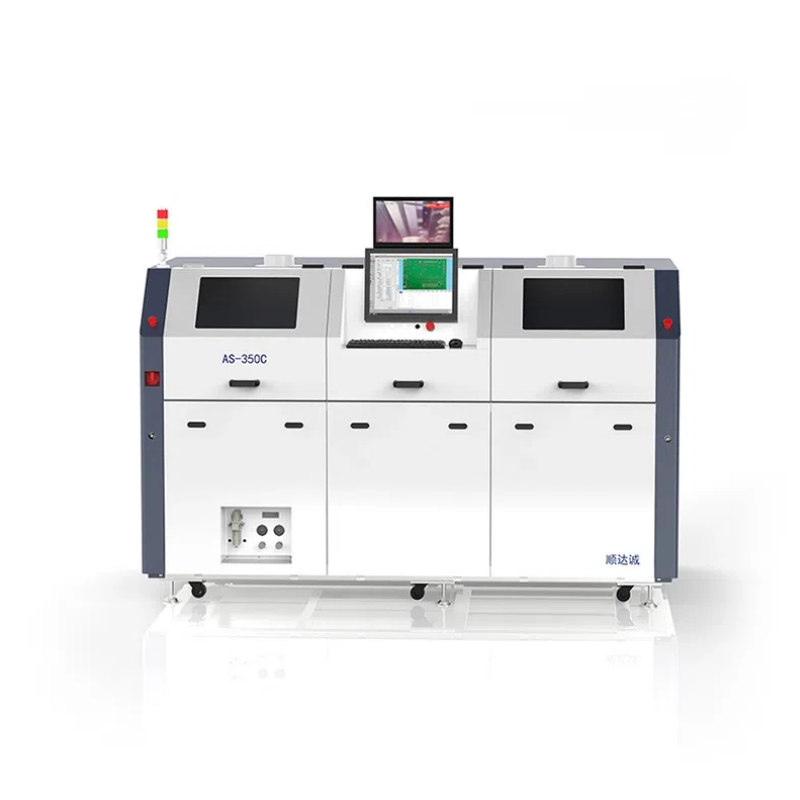
In modern electronics manufacturing, every second of cycle time counts. Yet speed cannot come at the cost of quality or reliability. The preheating stage is where that delicate balance begins. Engineers know that faster heating promises shorter cycles, but they also know it risks damaging components or compromising solder joints. That’s why the design of a selective wave soldering machine matters — it determines whether rapid preheating can truly deliver both speed and safety. At Dongguan Sundarc Automation Technology Co., Ltd., our systems are engineered to achieve faster preheat ramp-up without jeopardizing solder integrity or component lifespan.
Why Preheating Matters in Selective Wave Soldering
Preheating is more than just warming the board — it sets the entire process up for success. In selective wave soldering, the preheat stage activates flux, drives off solvents, and equalizes board temperature before molten solder ever touches the surface. Without sufficient preheat, flux cannot fully activate, leading to poor wetting or residues that cause post-solder defects.
Equally important, a properly managed thermal profile prevents thermal shock. Printed circuit boards (PCBs) often combine delicate plastic connectors, heat-sensitive ICs, and multilayer substrates. A sudden temperature rise can create microcracks in solder pads or delaminate the board. Controlled preheating allows every material to expand evenly, protecting components and ensuring mechanical reliability.
For process engineers, preheat control also affects process repeatability. Stable temperature gradients mean consistent solder joint formation from one cycle to the next — a must for high-yield production lines in automotive, medical, and power electronics sectors. This is why manufacturers increasingly focus on intelligent thermal management within their rapid preheating selective wave soldering systems.
Rapid Preheat Methods: IR, Convection, and Bottom Heating
When cycle time reduction becomes a production goal, preheat technology takes center stage. Different heating methods — infrared (IR), convection, and bottom-side heating — each have their strengths. Understanding their trade-offs helps manufacturers design efficient, safe preheat strategies.
Upper Convection and IR Top Heaters
Top-side heating systems play a crucial role in preparing large or heat-dense assemblies. Infrared (IR) top heaters deliver energy directly to the surface, heating quickly and efficiently. Convection modules, on the other hand, circulate hot air to warm the board more uniformly. In rapid preheat applications, many systems combine both — IR for speed and convection for temperature balance.
However, too much direct IR energy can overheat dark-colored components or plastic connectors. The key lies in modular control: systems like Sundarc’s machines use independently adjustable IR intensity zones, allowing operators to tune each section based on board layout. This precision avoids thermal hotspots while still achieving accelerated warm-up.
Bottom-Side Heaters and Infrared Modules
Bottom heating supports the process from below, ensuring the solder joints and pad interfaces reach optimal temperature without overheating the top-side components. Infrared or convection bottom modules are typically divided into several controllable zones. Each zone can be programmed with a specific temperature or ramp rate to match the board’s thermal mass.
A well-designed selective wave soldering machine offers scalable combinations of these modules. For example, in mixed-production environments, operators may configure a three-zone IR bottom heater for high-speed jobs and switch to a gentler two-zone convection setup for sensitive boards. The flexibility of modular IR and convection stacks is what allows rapid preheating to be both fast and safe — adapting to different product types without constant hardware changes.
How to Tune Rapid Preheat Without Damaging Sensitive Parts
Even with advanced heating modules, process tuning remains critical. Rapid preheating shortens cycle time only when thermal limits are respected. To achieve this, engineers should focus on ramp rates, soak times, and precise thermal monitoring.
The ideal temperature ramp rate is typically between 1–3°C per second, depending on board composition. Exceeding this can stress solder mask materials or plastic housings. Controlled ramping allows flux activation to complete before soldering begins. Introducing a brief “soak” phase at mid-temperature helps equalize heat distribution across components of different mass.
Thermocouples are indispensable for accurate profiling. By placing sensors at key points — such as near large ground planes or under sensitive ICs — engineers can visualize how quickly each region heats up. Modern selective soldering equipment, like Sundarc’s, supports real-time temperature feedback. Operators can store, recall, and compare profiles to maintain consistent thermal performance across product batches.
A safe recipe for rapid preheating selective wave soldering doesn’t just push the temperature higher — it optimizes how quickly and evenly that heat is applied. When tuned properly, preheating can be accelerated by 20–30% without inducing stress or degrading flux chemistry. The result: a faster soldering cycle that preserves long-term reliability.
Test Plan to Validate Faster Profiles
Before implementing a faster thermal profile in production, validation is essential. A structured test plan ensures that cycle time gains do not compromise quality.
Start with a baseline profile — the existing preheat and soldering recipe known to produce good joints. Then gradually reduce the preheat duration or increase temperature ramp rates in small increments. After each change, conduct detailed inspections of sample boards.
Key evaluation criteria should include:
Wetting quality: Verify full fillet formation and proper wetting angles.
SIR (Surface Insulation Resistance): Confirm no increase in flux residues that could cause leakage.
Visual and X-ray inspection: Check for microvoids, cracks, or delamination signs.
Dimensional stability: Confirm no warping or discoloration of sensitive areas.
Collect data from at least three trial runs under each condition. Once the profile passes all acceptance criteria, it can be approved for wider production use. Building this validation loop into the process allows manufacturers to safely implement rapid preheat strategies without risking rework or warranty failures.
Which Preheat Features Save the Most Time on Mixed Boards?
When purchasing or upgrading equipment, not all preheat systems offer the same efficiency potential. Process engineers managing multi-product lines should look for specific preheater features that maximize time savings while maintaining process control.
Modular preheater zones are one of the most valuable features. They allow operators to customize the number and type of heating modules (IR or convection) based on product requirements. When switching between small automotive control boards and large power modules, each setup can have its own optimized preheat configuration.
Programmable soak profiles are another time-saving advantage. Instead of manually tuning parameters for each board type, recipes can define distinct temperature ramps, soak times, and airflows. This ensures quick changeovers and eliminates operator guesswork.
Additionally, traceable recipe storage ensures consistent performance across shifts or facilities. Each thermal profile can be stored with a timestamp and process ID, creating full traceability for audits or quality control.
Sundarc’s selective wave soldering systems integrate all these features, giving process engineers flexibility without complexity. Whether producing small batches or running continuous high-mix lines, the machine’s intelligent preheat control guarantees both speed and repeatability — two metrics that define world-class soldering performance.
Conclusion
Faster preheating doesn’t have to mean higher risk. With the right process control and modular heating technology, manufacturers can safely cut solder cycle time while maintaining perfect joint quality. The selective wave soldering machine from Dongguan Sundarc Automation Technology Co., Ltd. embodies this balance — engineered for precision, equipped for efficiency, and proven to handle rapid preheat sequences without compromise.
To learn more about how rapid preheating selective wave soldering can optimize your production line, or to see our systems in live operation, contact us today to schedule a demo or request a detailed thermal profiling guide.


